

When most of us think of an umbrella, we picture sheltering from a downpour. But what if your brolly could do more? An umbrella with UV protection is exactly that—a specialised canopy engineered to be your personal shield against the sun's harsh ultraviolet radiation.
Unlike a standard rain umbrella, which might offer a bit of shade but little else, a true UV model is built differently. It uses tightly woven fabrics and specialised coatings to earn a high Ultraviolet Protection Factor (UPF), often UPF 50+, which blocks over 98% of the sun's damaging rays.
Your Portable Shade for Sun and Showers

Imagine having reliable, personal shade on demand. Whether you're caught in a sudden downpour or ambushed by intense sun on a day that looked overcast, a proper all-weather umbrella is a game-changer. It’s time to rethink the umbrella, not just as a rain-stopper, but as an essential tool for everyday life.
We tend to see umbrellas as something we only grab when the sky is already grey. This view completely overlooks one of the biggest environmental stressors we face daily: ultraviolet (UV) radiation. Even brief, repeated exposure to the sun adds up, contributing to long-term skin damage.
The Problem with Standard Umbrellas
Your average rain umbrella is designed with one job in mind: keeping water off you. Its fabric might be loosely woven or lack the specific treatments needed to fend off UV rays. Holding one up on a sunny day gives you a patch of shade, but it offers a false sense of security against invisible radiation.
This is where the UPF rating comes in. It’s the key difference between simple shade and genuine protection.
Think of a certified UPF-rated umbrella as a high-performance shield you can carry. It has been specifically tested and proven to create a physical barrier against the sun's most damaging UVA and UVB rays—a job your typical rain brolly simply isn't built to do.
Redefining All-Weather Protection
This guide challenges the old notion of an umbrella by highlighting the importance of certified sun defence. We'll explore what a UPF rating really means and why it's the gold standard for any quality umbrella with UV protection.
For instance, a standard umbrella doesn’t stop UV rays from bouncing off the pavement and hitting your skin from below. A well-designed UV umbrella, particularly one with a dark-coloured underside, is made to absorb these reflected rays, boosting your protection. You can see how these features come together in compact models like the CLOUDHAUS Mini 6-Ribs umbrella.
By the end of this guide, you’ll have a clear understanding of:
- What truly separates a UV umbrella from a regular one.
- How to assess important features like fabric, coatings, and construction.
- How to choose the right model for your lifestyle, from commuting to travelling.
So, What Does UPF 50+ Protection Actually Mean?
You’ve probably seen the ‘UPF 50+’ tag on everything from summer hats to high-performance umbrellas. But what’s the real story behind that number? The simplest way to think about it is to compare it to the SPF rating on your sun cream. UPF, which stands for Ultraviolet Protection Factor, is the fabric equivalent.
It measures how well a material shields your skin from the sun’s harmful ultraviolet radiation. Crucially, though, UPF accounts for both UVA (the ageing rays) and UVB (the burning rays). SPF, on the other hand, primarily measures protection against UVB. So, a high UPF rating gives you a much broader defence.
What Makes a UPF 50+ Rating the Gold Standard?
A UPF 50+ label is the highest certification a fabric can achieve, and it's not just a nice-to-have. It's a guarantee. It means the material has been rigorously tested and proven to block at least 98% of UV rays.
Put simply, only a tiny fraction of the sun’s radiation—about 1/50th, or 2%—can actually get through to your skin. To give you some perspective, a standard white cotton t-shirt often has a UPF of just 5, and that number plummets when it gets wet. A properly rated UV umbrella offers protection that’s in a completely different league.
A UPF 50+ rating isn’t marketing fluff; it’s a promise of scientifically verified performance. It means you can trust that you’re getting serious, reliable protection when you’re under that canopy.
This focus on sun safety is becoming a bigger deal here in the UK. We're getting smarter about the risks of sun damage, even on cloudy days. As a result, more of us are looking for umbrellas that can handle both a sudden downpour and a surprisingly sunny afternoon. It's a trend towards practical, all-weather gear that really performs, which you can see reflected in the latest insights on the growing UK umbrella market.
When Does a UV Umbrella Really Make a Difference?
Theory is one thing, but how does this play out in your day-to-day life? Here are a few common scenarios where that high UPF rating becomes genuinely useful.
- The Urban Commute: Imagine waiting for the bus on a wide, sun-drenched pavement. A glass bus shelter might offer shade, but UV rays are bouncing off the concrete and hitting you from the side. A UPF 50+ umbrella creates a personal pocket of shade, shielding you far more effectively.
- A Quick Lunch in the Park: Grabbing 20 minutes of fresh air on a park bench is one of life’s simple pleasures, but it's also a direct dose of sun. A good UV umbrella blocks the vast majority of rays from hitting your face and shoulders, keeping you cool and protected while you eat.
- Watching Weekend Sport: Picture standing on the sidelines for an entire afternoon football match. A baseball cap only protects a small patch of your face. Deploying an umbrella with UV protection gives you a proper, portable shield for your head, neck, and shoulders, making the experience much more comfortable.
The Real Science Behind a Sun-Blocking Umbrella
Ever wondered what turns a standard brolly into a proper personal sunshade? It’s not just about creating shade. It’s a clever combination of material science and thoughtful design that work together to fend off harmful UV rays.
The effectiveness of an umbrella with UV protection really comes down to three things: the fabric’s weave, any special coatings it has, and even its colour.
A Tightly Woven First Defence
Think of your umbrella's canopy as the first line of defence. A cheap, flimsy umbrella often has a loose weave. Hold it up to the light, and you might see tiny pinpricks of daylight shining through. If light can get through, so can invisible UV radiation.
That's where a dense, high-quality fabric makes all the difference. Materials like the 190–210T nylon used in CLOUDHAUS umbrellas are woven incredibly tightly. The 'T' here stands for thread count, so a higher number means a denser weave with fewer microscopic gaps. This physical barrier is your first step to blocking out the sun.
This infographic shows just how much of a difference a UPF 50+ rating makes.
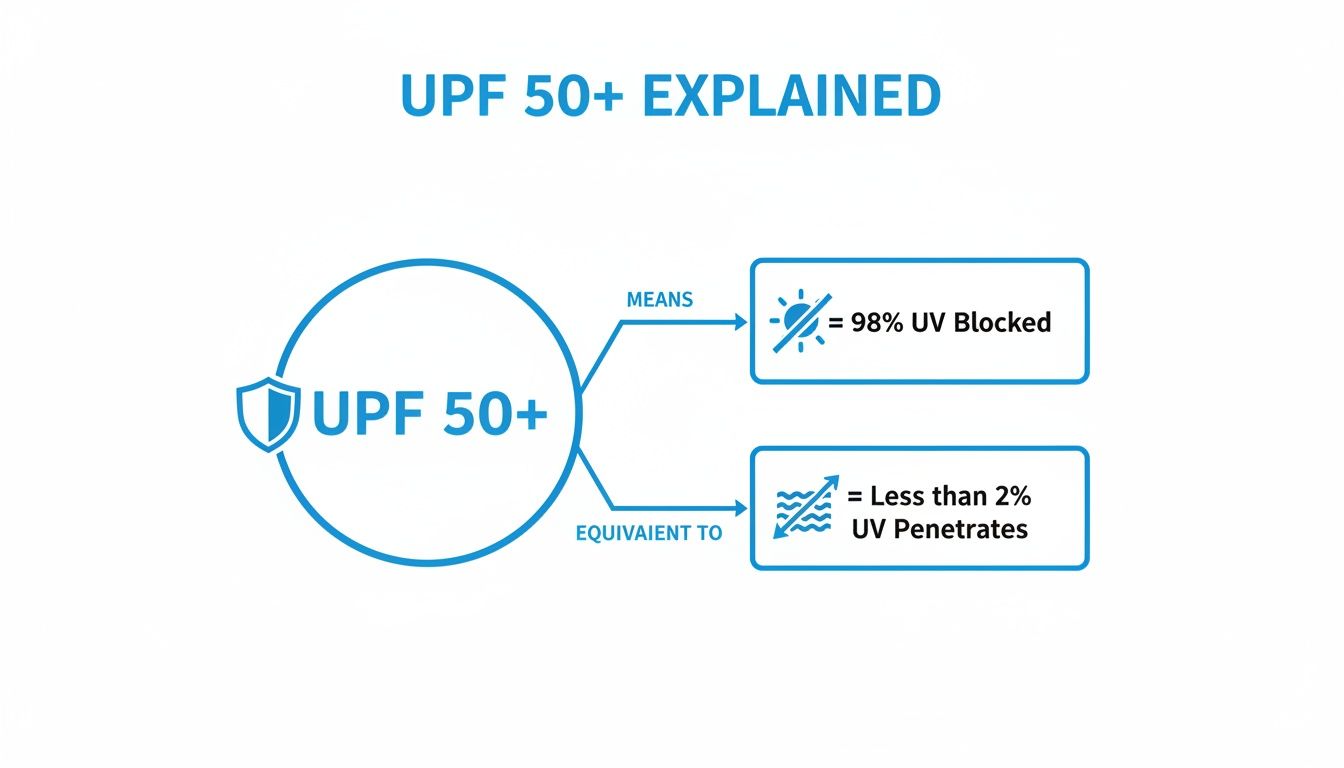
As you can see, a UPF 50+ rating isn't just a marketing term. It’s a certified standard confirming the fabric blocks at least 98% of UV rays, letting less than 2% pass through.
The Unseen Power of Specialised Coatings
While a dense weave provides a solid foundation, a specialised UV coating is the real game-changer. For example, a transparent chemical compound that absorbs UV radiation is applied to the fabric, boosting its protective power to achieve that top-tier UPF 50+ rating.
These coatings generally work in one of two ways:
- Reflective Coatings: Usually silver, these act like a mirror for the sun. Applied to the top of the umbrella, they bounce UV rays away before they even touch the fabric.
- Absorptive Coatings: Typically black, these absorb UV radiation and convert it into an incredibly small, harmless amount of heat, stopping it from ever reaching you.
Some of the best umbrellas use a dual-action system. A silver exterior reflects the direct sun, while a black interior lining is designed to soak up any sneaky UV rays that get reflected up from the pavement or sand.
Why a Dark Underside Is a Smart Choice
This brings us to a surprisingly important detail: the colour of the canopy's inner lining. You might think a bright, light colour would keep you cooler, but when it comes to UV safety, a dark interior is far superior.
Light-coloured surfaces reflect light, and that includes UV radiation. For example, if the underside of your brolly is pale silver, it can bounce scattered UV rays from the ground right back onto your face.
A black or dark navy lining, on the other hand, does the exact opposite. It absorbs those reflected rays, preventing them from doing any harm. This is a hallmark of a well-engineered umbrella with UV protection.
The table below breaks down how these different features contribute to your overall sun safety.
How Umbrella Features Impact UV Protection
| Feature | Low UV Protection | High UV protection (e.g., CLOUDHAUS) | Why It Matters |
|---|---|---|---|
| Canopy Weave | Loose, low thread count (e.g., <170T). Visible gaps when held to light. | Dense, tight weave (e.g., 190–210T). No light penetration. | A tighter weave creates a stronger physical barrier against UV rays getting through the fabric itself. |
| UV Coating | None, or a simple water-repellent layer. | UPF 50+ rated coating that reflects and/or absorbs UV radiation. | This is the most crucial element, blocking over 98% of UV rays. Without it, you're just sitting in the shade. |
| Interior Colour | Light (white, silver, pastel). | Dark (black, dark navy). | A dark interior absorbs UV rays reflected up from the ground (pavement, sand, water), preventing them from bouncing onto you. |
| Canopy Size | Small, "personal" size. | Generous arc size, offering wider coverage. | More coverage means more of your body is protected from direct and angled sunlight. |
Ultimately, a truly protective umbrella isn’t just one thing. It's the thoughtful combination of a dense fabric, a high-performance coating, and smart colour choices that creates a reliable shield against the sun.
How to Choose the Right UV Protection Umbrella
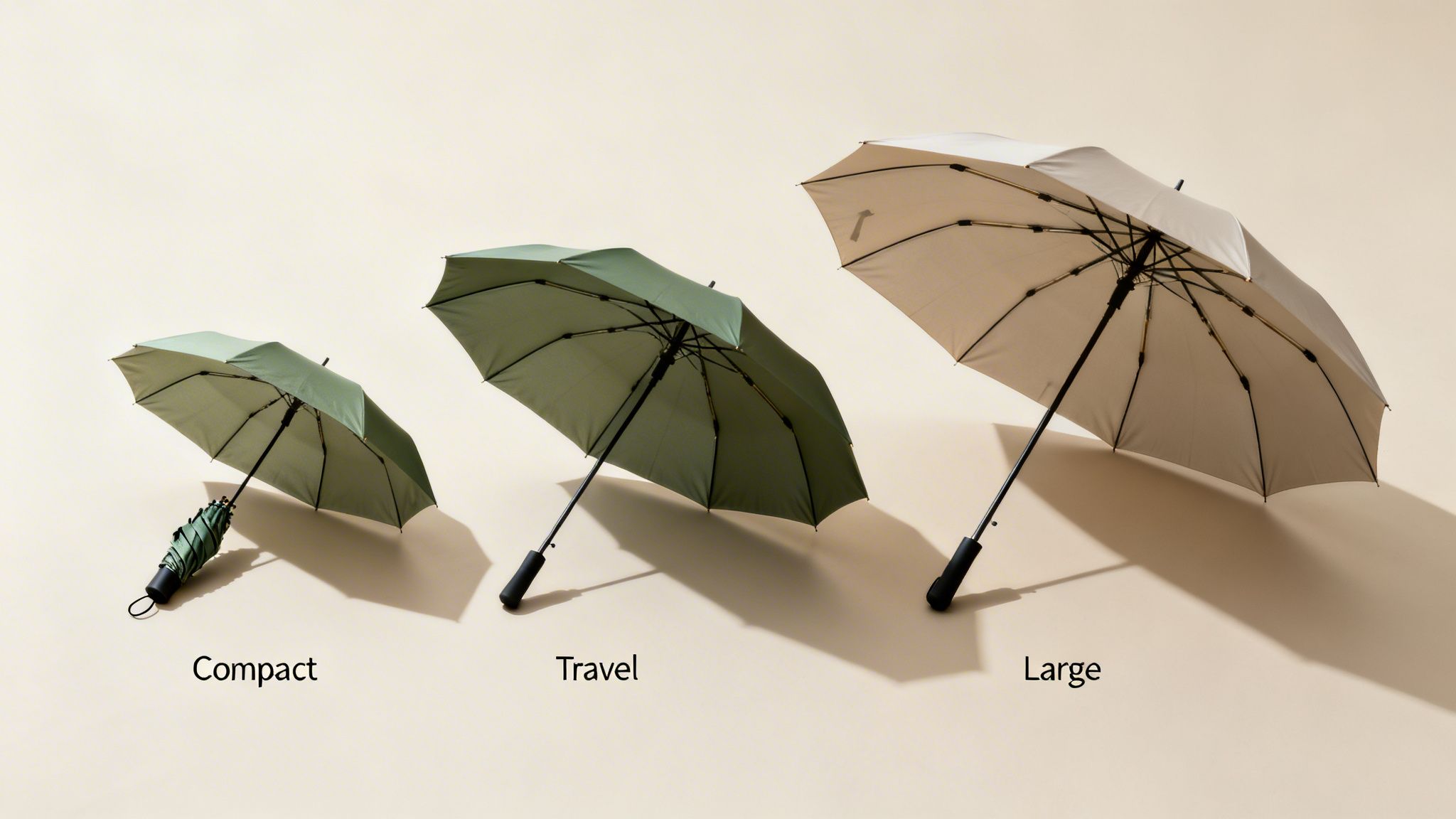
When you're looking for an umbrella with UV protection, it's easy to get focused on the UPF rating. But let's be honest, that rating is only half the story. The best sun umbrella is one that actually fits into your life—one you’ll grab without a second thought because it’s practical, durable, and just plain works.
Think about it. A huge golf umbrella might offer amazing sun cover, but if you're a commuter who needs to pack it into a briefcase, it'll probably end up forgotten in a cupboard. To find the right match, you need to think about how you'll really be using it.
Match the Umbrella to Your Lifestyle
Your daily routine is the biggest clue. Are you constantly on the move, or do you need a portable patch of shade for long afternoons spent in one place? The answer will point you to the perfect umbrella.
A well-chosen umbrella should feel like a trusted piece of kit, not a clumsy afterthought. The goal is to find one you genuinely want to carry, ensuring you get the protection you're paying for day in and day out.
Here are a few real-world scenarios to get you thinking:
- The Daily Urban Commuter: If you’re weaving through crowded city streets and battling wind tunnels between buildings, you need something compact but tough. A practical example would be choosing an auto-open/close model that you can operate with one hand while holding a coffee in the other.
- The Frequent Traveller: For anyone living out of a suitcase, every gramme and centimetre matters. Your ideal travel companion is ultra-lightweight and folds down small enough to fit in a handbag or the side pocket of a backpack, like the CLOUDHAUS Mini 6-Ribs umbrella.
- The Weekend Spectator or Family Outing: When your weekends are spent at the park or watching the kids play football, coverage is king. You need a generous canopy that creates enough shade for two or more people, plus a picnic basket or a couple of bags.
Key Features Beyond the Canopy
While the fabric’s weave and coatings provide the sun defence, it's the frame that dictates whether your umbrella survives its first real test. A flimsy frame makes even the most advanced UPF 50+ canopy useless when you need it most.
The true test of a great umbrella isn't a calm, sunny day—it's a windy one. Durability is a core part of protection. An umbrella that breaks or flips easily is one that has failed you completely.
This is where smart engineering makes all the difference. Look for features like StormFlex fibreglass ribs, which you'll find in CLOUDHAUS umbrellas. They're designed to bend and flex with the wind, not fight against it and snap. For example, when a sudden gust hits, the ribs can give way without breaking, allowing you to easily push the canopy back into shape.
Here’s a quick guide to how different CLOUDHAUS models are designed for specific needs:
| User Type | Recommended Model | Key Feature | Why It Works |
|---|---|---|---|
| Urban Commuter | CLOUDHAUS Core | Wind-resistant build | Compact but strong enough for city wind tunnels. |
| Frequent Traveller | CLOUDHAUS Mini | Ultra-lightweight | Extremely portable for packing in luggage or a daypack. |
| Family Use | CLOUDHAUS Plus | Large canopy arc | Offers generous shade for multiple people. |
By pairing the umbrella's features with your day-to-day life, you ensure it’s not just an accessory but a genuinely useful tool. For example, if you often need to shelter yourself and a partner, learning about the CLOUDHAUS Plus 24-Ribs model will show you just how much coverage a larger umbrella can provide. Taking the time to choose wisely means you get practical, lasting value.
Practical Uses for Your UV Umbrella Beyond the Beach
Most of us think of a UV protection umbrella as something you chuck in a suitcase for a beach holiday, only to forget about it for the rest of the year. But its real value isn't just for lounging on the sand; it's for all those everyday moments when the sun catches you off guard. It's a tool for daily life, not just special occasions.
Think about your commute. The sun reflecting off glass buildings and pavements can create an urban "canyon effect," focusing UV rays right where you’re walking. Those few minutes waiting for a train on an exposed platform or strolling across campus between lectures all contribute to your total sun exposure over time.
Smart Protection for Everyday Scenarios
For anyone with sun-sensitive skin, or for those who simply want to be proactive about their health, a good UV umbrella is less of a gadget and more of an essential. It's about having reliable, personal shade ready to go at a moment's notice.
Consider just how often a UV umbrella can be a game-changer:
- Watching Sideline Sports: A Saturday afternoon cheering on the kids from the sidelines often means hours in the open. A wide-canopy UV umbrella carves out a cool, protected spot for you and the family to enjoy the game safely.
- Outdoor Lunch Breaks: Grabbing some fresh air on your lunch break is fantastic, but it also means direct sun exposure when it's at its strongest. A compact UV umbrella offers instant shade, making that well-deserved break far more comfortable.
- Walking the Dog: Those short but frequent daily walks really add up. Keeping a lightweight, easy-to-open umbrella by the door turns sun safety into an effortless habit. A practical example is using it for your mid-day walk when UV levels are highest, even if the walk is only 15 minutes long.
A Dual-Purpose Investment for Any Weather
This is where you realise a dual-purpose umbrella isn't an expense, it's a smart investment. You’re getting one high-performance tool that gives you certified protection from both a scorching sun and a sudden downpour. It just makes sense, simplifying what you need to carry and ensuring you’re prepared for whatever the notoriously fickle British weather decides to do.
This idea of multifunctional gear is clearly catching on. In the UK, the umbrella market is showing impressive resilience, with consumption surging by 39% in 2024 to reach 23 million units. This growth points to a rising demand for advanced features like UV protection, as people look for umbrellas that do more than just fend off the rain. You can discover further insights into umbrella consumption in the UK and see how trends are shifting.
Brands like CLOUDHAUS are designing their umbrellas with exactly this dual functionality in mind. From the compact Mini to the much larger Max, their models feature UPF 50+ coated canopies and robust, wind-resistant frames. It’s a design philosophy that aligns perfectly with the need for durable, all-weather gear that keeps you covered, come rain or shine. For those who need serious coverage, a model like the CLOUDHAUS Max with its 72 ribs provides a massive shield for complete peace of mind.
Looking After Your Umbrella for Long-Term Protection
Think of a good umbrella with UV protection as an investment, not just a purchase. It's a piece of high-performance gear designed to protect your health, and like any quality kit, it needs a little bit of care to keep performing at its peak. A few simple habits are all it takes to preserve the canopy, protect the frame, and ensure that UPF 50+ rating holds up for years.
If there's one golden rule, it's this: always let your umbrella dry completely while it's open. It’s tempting to collapse it and shove it in your bag straight after a downpour, but trapping moisture is the fastest way to grow mould and mildew. A practical example would be to hang it open on a hook in your hallway or stand it in a bath overnight. This prevents fabric degradation and ensures it’s ready for the next use.
How to Clean and Store It Properly
When it comes to cleaning the canopy, gentle is the name of the game. You want to remove dirt without stripping away that all-important protective layer. Harsh detergents are a definite no-go.
- Spot Clean with Care: For any smudges or dirt, just use a soft cloth with a bit of mild soap and lukewarm water. Dab the area gently—there’s no need to scrub aggressively.
- Rinse It Clean: After you've cleaned a spot, rinse the soap away with fresh water. Any residue left behind can interfere with the fabric’s water repellency.
Storing your umbrella correctly is just as important as cleaning it. Once it's bone dry, collapse it and pop it back into its protective sleeve. This simple step shields the canopy from getting snagged and protects the frame from getting knocked about, keeping the fabric's weave tight and the UPF 50+ coating in top condition.
Following this straightforward advice ensures your CLOUDHAUS umbrella gives you fantastic long-term value, ready to offer reliable shelter from sun or rain whenever you need it.
Your UV Umbrella Questions, Answered
When you start looking into an umbrella with uv protection, a few common questions always seem to pop up. Let's clear the air and walk through the details so you can feel confident you're getting the protection you need.
Is a Darker Umbrella Better for Sun Protection?
This is a great question, but the answer isn't as simple as "yes" or "no". While a dark-coloured canopy on the outside does absorb more UV radiation, the real secret to superior protection is often a dark inner lining.
Why? Think about a sunny day at the beach or just walking on a bright pavement. UV rays don't just come from above; they bounce right back up off surfaces like sand, water, and concrete. A dark interior absorbs these reflected rays, stopping them from reaching your skin. So, while colour plays a part, the certified UPF 50+ rating is what truly matters. That rating tells you the fabric's weave and specialised coatings are doing the heavy lifting.
Can't I Just Use Sun Cream?
You absolutely should use sun cream, but for total peace of mind, it’s best to team it up with a UV umbrella. We've all been there—you apply sun cream in a hurry, miss a spot, or forget to reapply it every couple of hours. It’s an easy mistake to make.
A UPF 50+ umbrella acts as your personal, portable shade, creating a physical shield that consistently blocks over 98% of harmful rays. It’s reliable, never needs reapplying, and has the brilliant side effect of keeping you much cooler. A practical example of this synergy is at an all-day outdoor festival; apply sun cream in the morning, and use the umbrella for continuous, hassle-free protection throughout the day, especially during the peak sun hours of 11 am to 3 pm.
Will the UV Coating Wear Off Over Time?
A well-made UV coating, like the ones we use on CLOUDHAUS umbrellas, is designed to last. That said, like any high-performance gear, its lifespan depends on how it's treated. Constant friction from folding, heavy use, and exposure to grit can eventually affect the coating.
The good news is that a little care goes a long way. Always let your umbrella dry completely while open to prevent mildew and fabric stress. If it gets dirty, a gentle clean with a soft cloth and mild soapy water is all it needs. Storing it in its protective sleeve when you're not using it will also keep the fabric in top condition, ensuring that UV protection is there for you season after season.
Ready to find an all-weather companion that has your back, rain or shine? Take a look at the full CLOUDHAUS range of stylish, durable, and UPF 50+ rated umbrellas. Discover your ideal model today.
Composed with the Outrank app